Damaged Bag Fabric
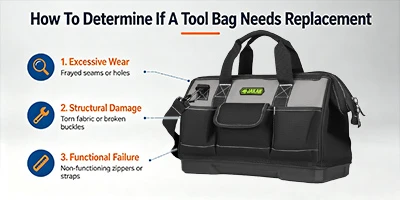
Canvas/Oxford Bags: Extensive wear and tear, multiple holes (seam cannot be repaired), or prolonged dampness causing mold and brittleness, making it prone to tearing.
Leather Bags: Extensive cracking and mold on the leather surface that cannot be repaired, affecting normal use.
Tool Bags of Any Material: Unraveling or fabric breaks in load-bearing areas (bottom, strap connections), significantly reducing load-bearing capacity and making tools prone to falling out during use.
Unrepairable Damaged Core Components
Zippers: Noticeable jamming when pulling, or stuck/broken zipper heads. Replacing a zipper is far more expensive than buying a new bag, and repaired zippers have poor durability.
Shoulder Straps/Handles: Single-layer fabric cracks, longitudinal fiber breaks, prone to breaking under load, tools may fall out at any time, posing a safety hazard.
Hardware Buckles: Broken, rusted, or jammed buckles, unable to secure the bag or store tools, affecting ease of use. 3. Functionality No Longer Meets Needs
Insufficient Capacity: As tools are purchased in increasing quantities, long-term overloading and compression cause severe deformation of the bag, making it impossible to store properly.
Compression also accelerates damage.
Protection Failure: The waterproof coating peels off, leaving the tools completely waterproof after contact with water. This allows tools to easily become damp and rust, failing to meet the needs of outdoor or humid environments.
Odor Residue: Long-term storage of tools accumulates oil, sweat, and odors that cannot be removed even after repeated washing. This can easily lead to mold growth, affecting user health.