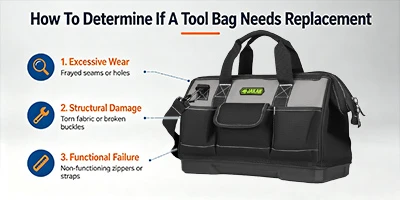
To judge the quality of a physical tool bag, you can check it item by item from several core dimensions: material, structural craftsmanship, and detailed accessories. Specific methods are as follows:
1. First, check the fabric material to determine the basic durability.
The material directly determines the lifespan of the tool bag. These points can be judged intuitively:
Canvas/Oxford cloth: Squeeze and rub the fabric by hand. It should not deform or soften after being squeezed. The surface should be wear-resistant and not easily fade. Tear open the edge to check the thickness; the thicker the fabric, the better its load-bearing capacity. Also check the waterproofness; splash a small amount of water on the surface. If the water droplets roll off quickly without penetrating, the waterproofing process is up to standard.
Rigid toolboxes: For plastic boxes, check if the edges are smooth and free of burrs. The box should not easily deform when pressed. For metal boxes, check if the paint is even and if there are any rust spots on the corners. A clear sound when tapping the box indicates sufficient thickness.
2. Check the structural design to assess load-bearing capacity and deformation resistance.
A qualified tool bag should not deform when fully loaded with heavy objects. Focus on checking these areas:
Bottom Support: Avoid hard bottoms with only thin plastic sheets. Opt for EVA composite bottoms or thickened PP boards. A good tool bag should not warp or peel off when stepped on, and should not collapse into a U-shape when loaded with heavy objects.
Center for Gravity and Carrying: Try carrying the bag fully loaded with tools. A single-shoulder bag should not tilt forward and sag on the shoulder, and the shoulder straps of a backpack should distribute pressure evenly without causing shoulder pain.
Structural Form Resilience: When fully loaded, the side panels and compartments should not sag; they should maintain their firm shape, and tools should not wobble or pile up unnecessarily.
Structural Form Resilience: A qualified tool bag should not collapse when fully loaded with heavy objects, maintaining its upright shape, and tools should not wobble or pile up unnecessarily.
3. Examine the craftsmanship details to judge workmanship and quality control.
Details best reflect true quality; pay close attention to stitching and stress points:
Stitching: Check key stress points such as the base of the handles, the shoulder strap connections, and both ends of the main compartment zipper. Double stitching or triangular reinforcement is essential. High-strength nylon thread is preferred, with even and tight stitches, no skipped stitches or loose threads. Patches reinforcing frequently bent areas enhance durability.
Fixed structure: Professional tool bags use crisscross reinforcement with built-in reinforcing rivets. This design reduces the risk of fraying and bulging, extending lifespan.
4. Inspect hardware to assess long-term stability.
Hardware is the most prone to problems and should not be overlooked:
Zipper: Repeatedly zip and close the zipper several times. It should lock tightly without jamming or unusual noises. Prioritize zippers with clear brand markings such as YKK and SBS. Inferior zippers are prone to breakage and rust within six months.
Fasteners: For D-rings, adjusting buckles, and snap buckles, prioritize thickened alloy materials and avoid thin iron plating. Thin iron is prone to whitening and cracking after prolonged use, and it will rust faster in humid environments.