Based on production and usage scenarios, common tool bag manufacturing problems can be mainly divided into four categories: fabric cutting, structural sewing, accessory processing, and special functions. Specific problems are as follows:
1. Fabric and Cutting Problems
Uneven Edge Cutting: Insufficient equipment precision during material cutting leads to uneven fabric edges and dimensional deviations, resulting in gaps during subsequent splicing, affecting the overall size and appearance.
Laminate Layer Delamination: This is most common in EVA material tool bags. Inadequate bonding between the fabric, lining, and EVA core material causes delamination and separation after a period of use, resulting in the overall shape collapsing and losing its hold.
2. Structural Sewing Problems
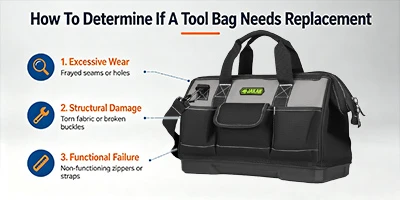
Unreinforced Load-Bearing Parts: Key load-bearing parts such as shoulder straps, handles, and bag openings are often only single-stitched or lack reinforcement with bar stitching, making them prone to tearing and breakage under load.
1. Obvious Stitching Issues: Skipped stitches, missed stitches, and inconsistent stitch tightness occur during sewing, affecting not only the appearance but also reducing overall durability and making the stitches prone to cracking during use.
3. Accessory Processing Issues
Poor Quality Hardware Accessories: Zippers, hooks, D-rings, and other hardware are not rust-proofed, leading to rust and jamming after a period of use; hardware is not securely installed and easily falls off or is lost.
Zipper Manufacturing Defects: Misaligned zippers cause difficulty in pulling, or even complete detachment; sharp zipper pull edges can easily scratch hands or other objects.