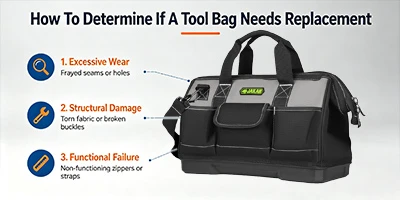
The most critical manufacturing requirements for tool bags are load-bearing reinforcement, adaptability, and durability/protection. These directly determine the practicality and lifespan of the tool bag. Specifically:
1. Reinforcement of Key Load-Bearing Components
This is the most crucial manufacturing requirement for a tool bag, directly related to safety. Shoulder straps, handles, bag seams, and pocket openings-areas that bear tensile stress-must be double-stitched and reinforced with bar stitching. Inadequate reinforcement will easily lead to seam breakage under load, rendering the bag unusable. Professional, qualified tool bags will have multiple layers of reinforcement in high-load-bearing areas to ensure they do not crack under long-term load.
2. Design/Structure Matching the Usage Scenarios
The core value of a tool bag is storing tools; therefore, its structure and craftsmanship must meet actual needs. Compartments and pockets corresponding to different tool sizes must be precisely sized and logically laid out. The shaping process of precision instrument tool bags must meet standards to ensure tools are securely placed and easily accessible. If the design and craftsmanship are flawed, tools may not fit properly, or they may wobble and be damaged, rendering them useless.
3. Durable and Protective Technology Adapting to the Usage Environment
This directly determines the lifespan:
For outdoor/construction site tool bags: Abrasion-resistant and tear-resistant fabrics, as well as waterproof technology, are crucial to withstand wear and tear in complex environments.
For precision tool/digital tool bags: Shaping and cushioning technology is critical to effectively protect tools from impact damage.
For tool bags frequently exposed to water/oil: Stain-resistant and easy-to-clean fabrics are essential to extend their lifespan.